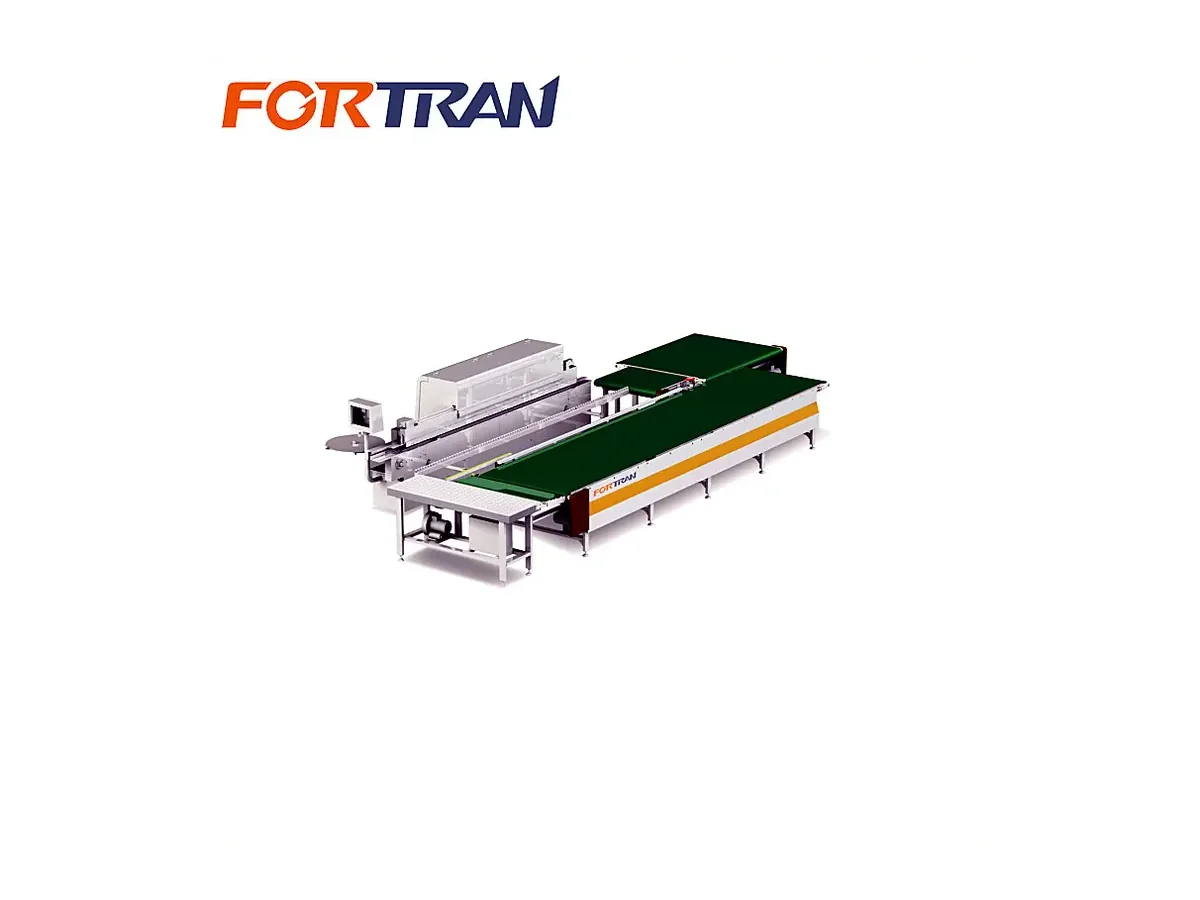
Workpiece
Panel length, width, thickness and weight.
FORTRAN belt-transfer edge bander return conveyor for furniture panels. Match underside contact, outfeed timing and the operator return route before ordering.
▷ See an edge-banding connection line in operation| Working height | 950±50mm |
|---|---|
| Workpiece thickness | 10~60mm |
| Workpiece length | 200-2440mm |
| Maximum load | 60 kg |
| Workpiece width | 60-1220mm |
| Speed | 18-32 M/min |
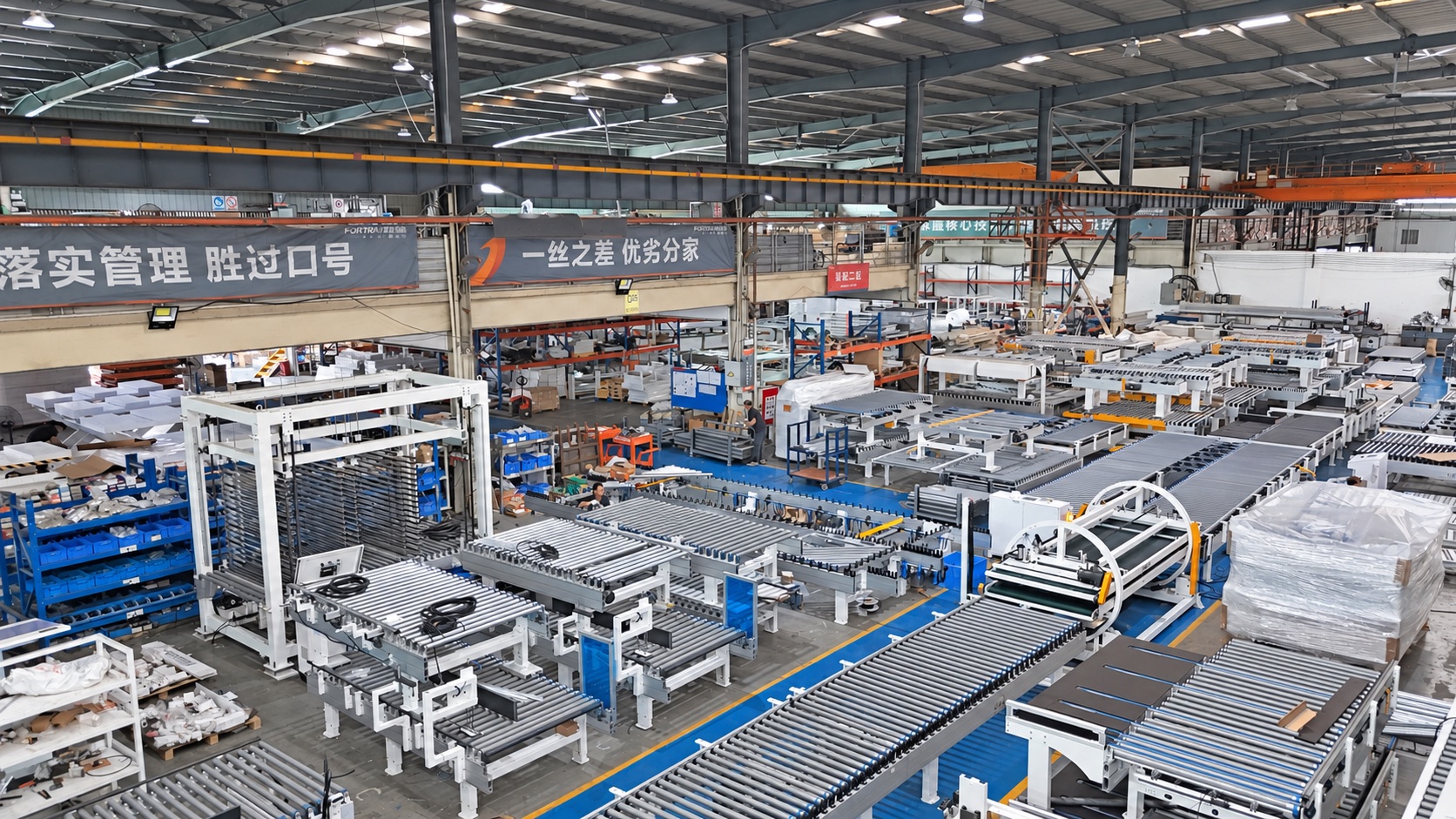
Plan panel handling and packaging around your workpieces, existing machines and factory layout. See the FORTRAN workshop and real equipment operation before discussing a configuration.
Visit the factory →Send your requirements so the FORTRAN team can discuss suitable equipment, configuration and a quotation.
Continue on WhatsApp with these requirements →FORTRAN belt-transfer edge bander return conveyor for furniture panels. Match underside contact, outfeed timing and the operator return route before ordering.
Panel length, width, thickness and weight.
Equipment inlet and outlet direction, working height and production rhythm.
Factory layout, workstation spacing and operating space.
An edge bander return conveyor brings panels from the machine outfeed towards the operator or the next handling position. This FORTRAN arrangement uses belt transfer within the return path; it supports material handling around the edge bander rather than performing edge banding itself.
Plan the complete route around the existing edge bander: panel entry and exit direction, working height, return-side space and the receiving position. Confirm the supporting and contact surfaces with representative panels, particularly where a finished face rests on the transfer mechanism.
Send the edge bander model, outfeed height and direction, panel size and weight range, spacing between panels and the available return-side area. Review machine signals and the full transfer path before confirming compatibility.
Use representative finished panels to check supporting areas and belt contact during outfeed, transfer and return. Include the smallest and largest panels and their surface condition; belt contact does not establish a scratch-free result for every finish.
Describe the panel mix, receiving position, contact restrictions and space around the machine. Compare how each proposed arrangement supports and releases the panel at the handover points; do not choose from the mechanism name alone.
Identify the panel face or underside resting on the belt and provide representative finishes and panel sizes. Show the edge-bander outfeed and next receiving surface. Review support and transfer behaviour with the proposed belt arrangement rather than assuming every finish needs the same contact method.
Compare panel conveying and transfer arrangements
See an edge-banding connection line in operation
Send your edge bander and return-path layoutProduct image
Download imageChinese / English specifications
Download detailsData version: 2026-09-30· Original product source
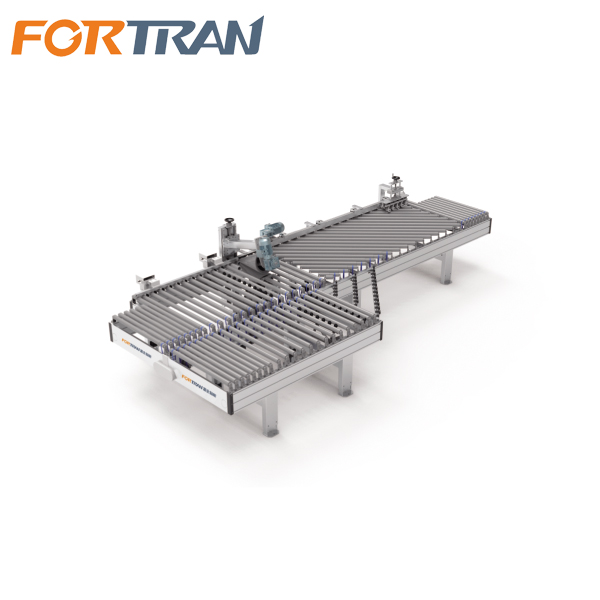
FORTRAN 90-degree tapered roller conveyor for edge-banding lines. Review panel orientation, corner clearance and receiving-conveyor support for a quote.
View product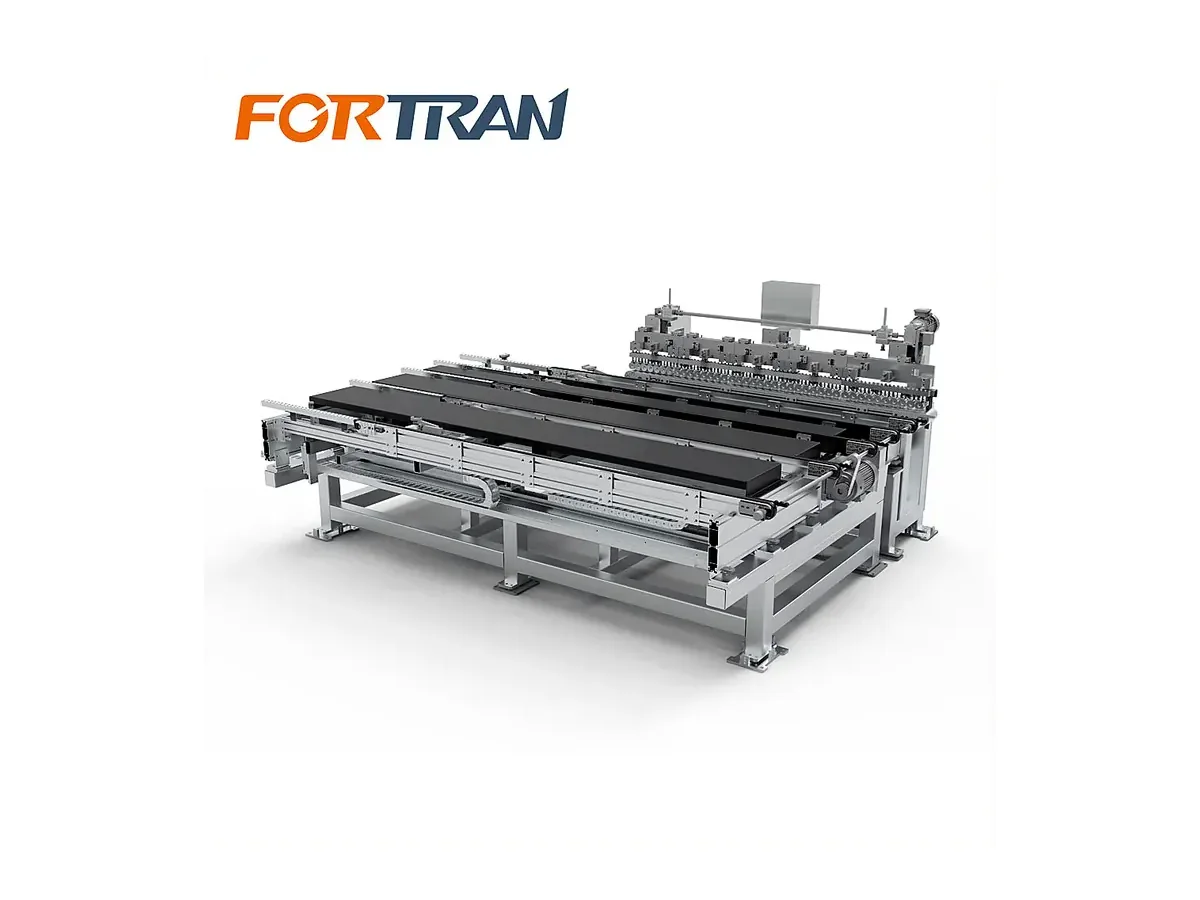
FORTRAN flexible-pusher edge bander return conveyor. Review panel contact points, return routing and operator receiving positions for the proposed cell.
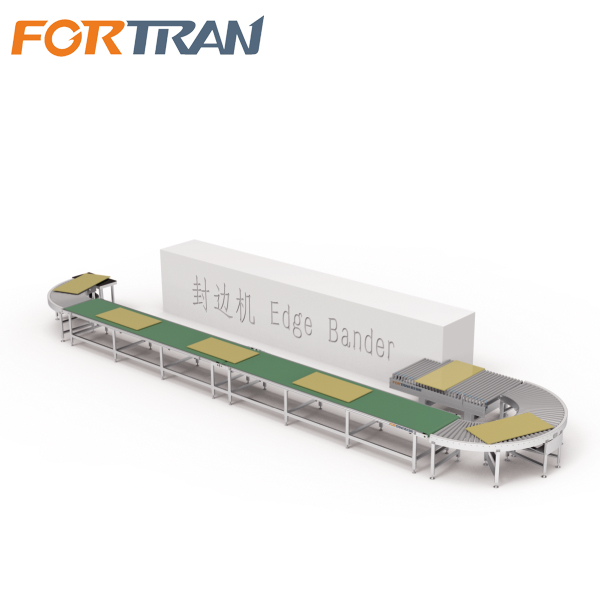
FORTRAN curved edge bander return conveyor for furniture panels. Match the return route, turning clearance and operator handover to the actual machine layout.
Packaging · Conveying · Lifting · Loading · Cleaning