Workpiece
Panel length, width, thickness and weight.
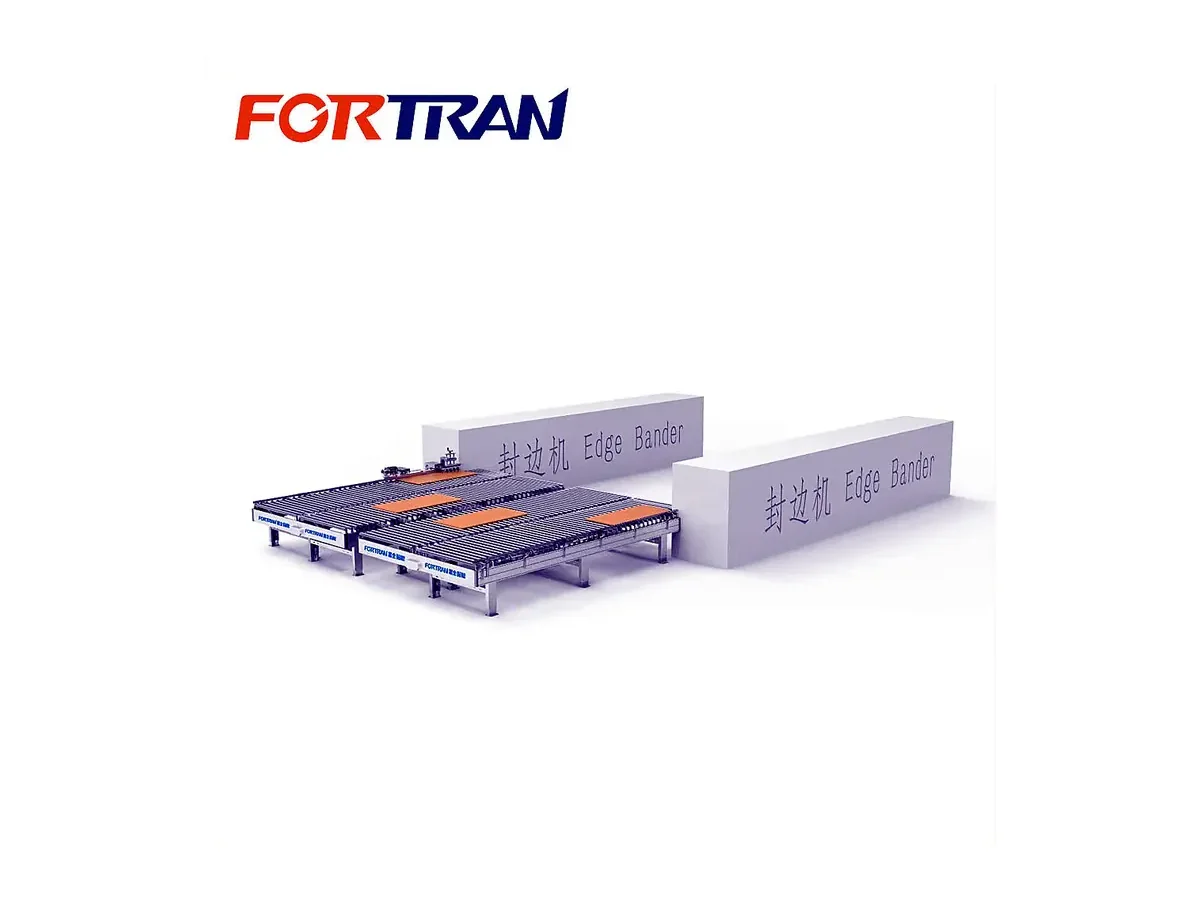
FORTRAN double-row return conveyor for two same-direction edge banders. Define each lane's role, machine handovers and panel sequence in the proposed layout.
FORTRAN double-row return conveyor for two same-direction edge banders. Define each lane's role, machine handovers and panel sequence in the proposed layout.
Panel length, width, thickness and weight.
Equipment inlet and outlet direction, working height and production rhythm.
Factory layout, workstation spacing and operating space.
| Working height | 900±50mm |
|---|---|
| Plate aspect ratio | 1:7.5 |
| Workpiece length | 250-2750mm |
| Maximum load | 60 kg |
| Workpiece width | 250-1220mm |
| Conveying speed | 18-32 M/min |
A double-row panel return system provides two handling routes between two same-direction edge banders. Define whether each route serves a processing pass, a receiving machine or a separate panel stream before selecting the configuration.
Two routes can separate the planned panel flow, but route count is not a production-rate specification. Check the edge-banding cycles, panel spacing, receiving availability and size mix before agreeing a sustained output target.
The double-row arrangement has two handling routes instead of one shared route. Their use must be defined in the process layout; the names do not specify automatic sorting, independent buffers or a particular production capacity.
No. Finished output also depends on edge-banding cycles, panel size mix, spacing and transfer timing. Compare the proposed sequence with the actual machines and representative production orders.
State the intended panel streams and processing passes in the inquiry. The configuration review must establish how panels are assigned and received; do not assume identification, sorting or independent control functions are included without an agreed supply scope.
Review the full panel envelope on both routes, including the largest and smallest panels, transfer gaps and operator access. Agree the control handovers and test the expected panel sequence before accepting the installation.
Label the role of each lane on the layout and trace representative panels through the required processing passes. Show where panels enter, wait and leave each route. Ask the proposal to identify the handover and control sequence; two lanes alone do not define completed line output.
Compare panel conveyor and transfer arrangements
Ask FORTRAN about this return conveyor layoutProduct image
Download imageChinese / English specifications
Download detailsData version: 2026-09-30· Original product source
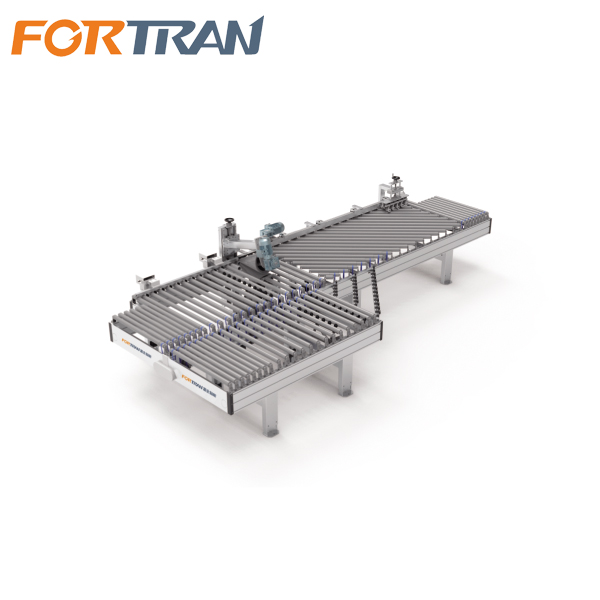
FORTRAN 90-degree tapered roller conveyor for edge-banding lines. Review panel orientation, corner clearance and receiving-conveyor support for a quote.
View product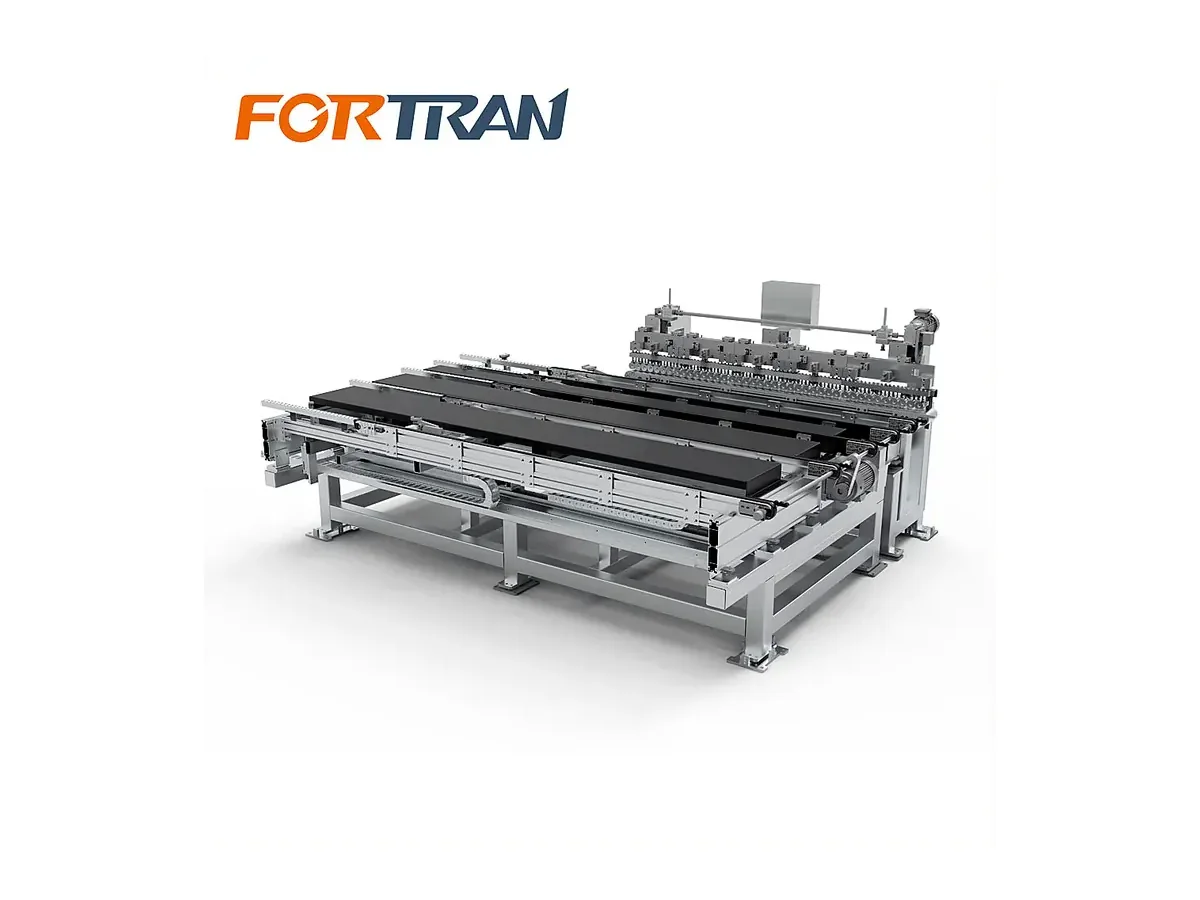
FORTRAN flexible-pusher edge bander return conveyor. Review panel contact points, return routing and operator receiving positions for the proposed cell.
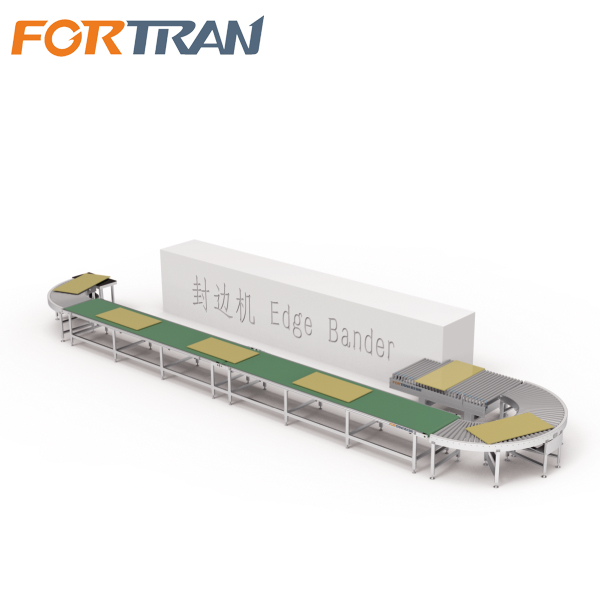
FORTRAN curved edge bander return conveyor for furniture panels. Match the return route, turning clearance and operator handover to the actual machine layout.
Packaging · Conveying · Lifting · Loading · Cleaning