Workpiece
Panel length, width, thickness and weight.
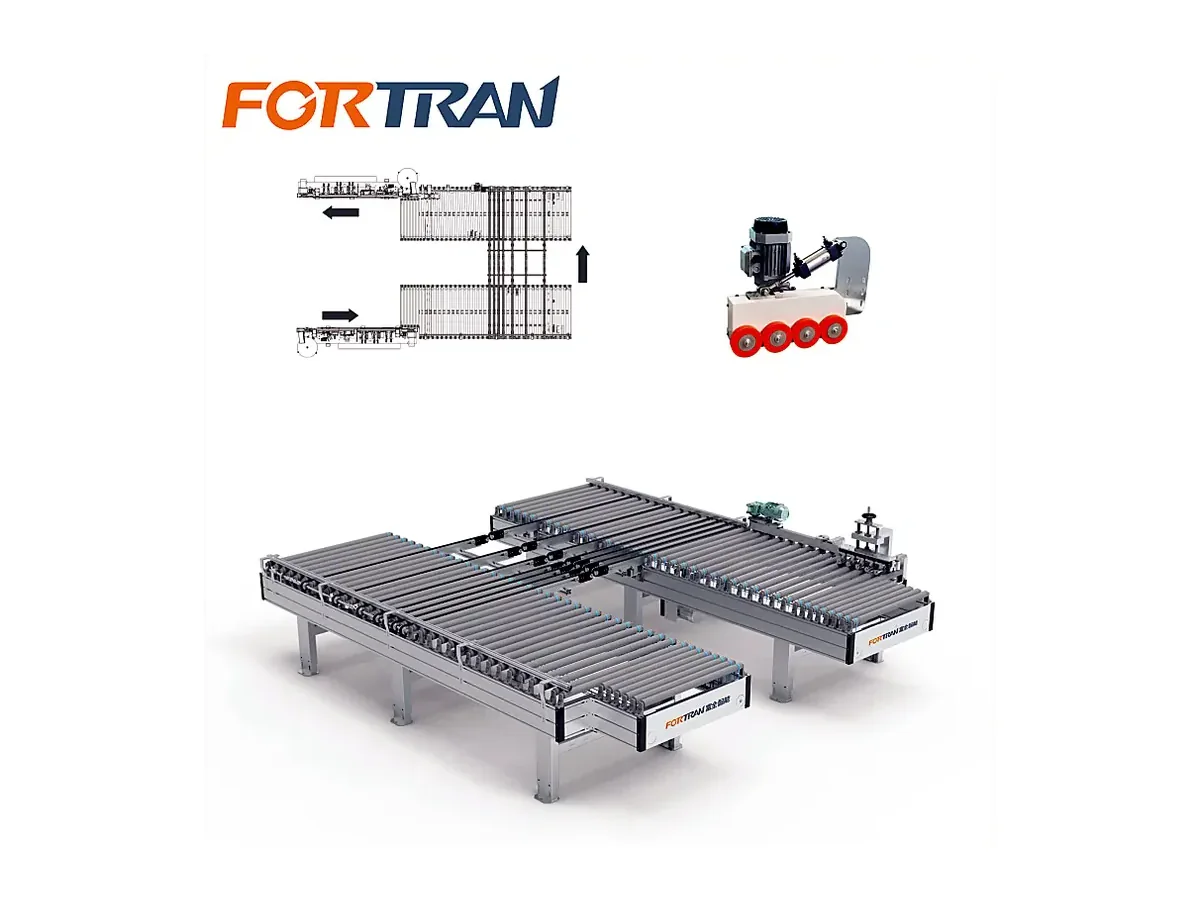
FORTRAN single-row return conveyor connecting two same-direction edge banders. Map processing passes, shared-lane use and panel handover positions.
FORTRAN single-row return conveyor connecting two same-direction edge banders. Map processing passes, shared-lane use and panel handover positions.
Panel length, width, thickness and weight.
Equipment inlet and outlet direction, working height and production rhythm.
Factory layout, workstation spacing and operating space.
| Working height | 900±50mm |
|---|---|
| Plate aspect ratio | 1:7.5 |
| Workpiece length | 250-2750mm |
| Maximum load | 60 kg |
| Workpiece width | 250-1220mm |
| Conveying speed | 18-32 M/min |
A single-row panel return system connects two edge banders running in the same direction with one return lane. It supports panel circulation between the agreed processing passes; it is not a single edge-banding machine with two processing units.
Draw the panel route for each pass and define how the shared lane is used. Machine positions alone do not explain the production sequence: identify the entry point, receiving point and required panel orientation at each handover.
No. This arrangement describes one return lane connecting two same-direction edge banders. The machines, processing passes and use of the shared path must be identified in the agreed layout.
Map the sequence for representative panels and state where each panel enters and leaves the route. Agree the handover timing and panel order instead of assuming that both machines can send panels onto the shared route at any time.
Compare it when the proposed flow needs separately assigned routes. Review the actual size mix, processing passes, floor space and machine availability in both layouts; adding a lane does not by itself establish a higher finished output.
Send both machine layouts and interface heights, the edge-processing sequence, panel size and weight range, surface finish and expected size mix. Describe the required sustained output so the proposed route and machine timing can be reviewed together.
Trace a representative panel through each required edge-banding pass, showing its entry and exit point on the shared route. State the required orientation and order at each handover. Use the sequence to review how the two machines share the return path.
Compare panel conveyor and transfer arrangements
Ask FORTRAN about this return conveyor layoutProduct image
Download imageChinese / English specifications
Download detailsData version: 2026-09-30· Original product source
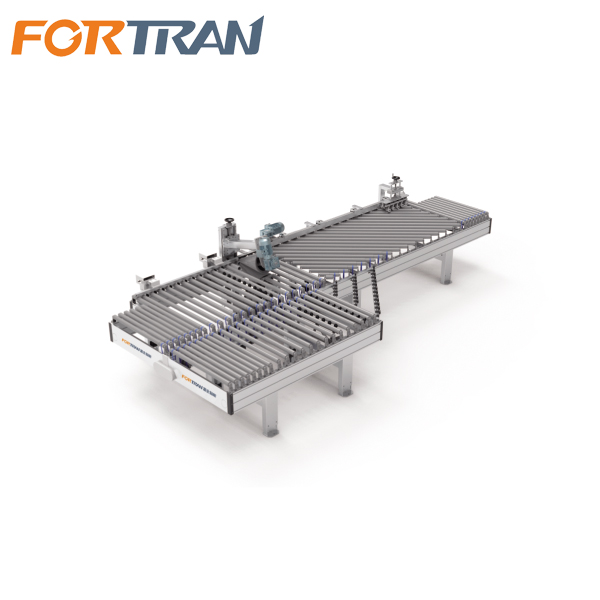
FORTRAN 90-degree tapered roller conveyor for edge-banding lines. Review panel orientation, corner clearance and receiving-conveyor support for a quote.
View product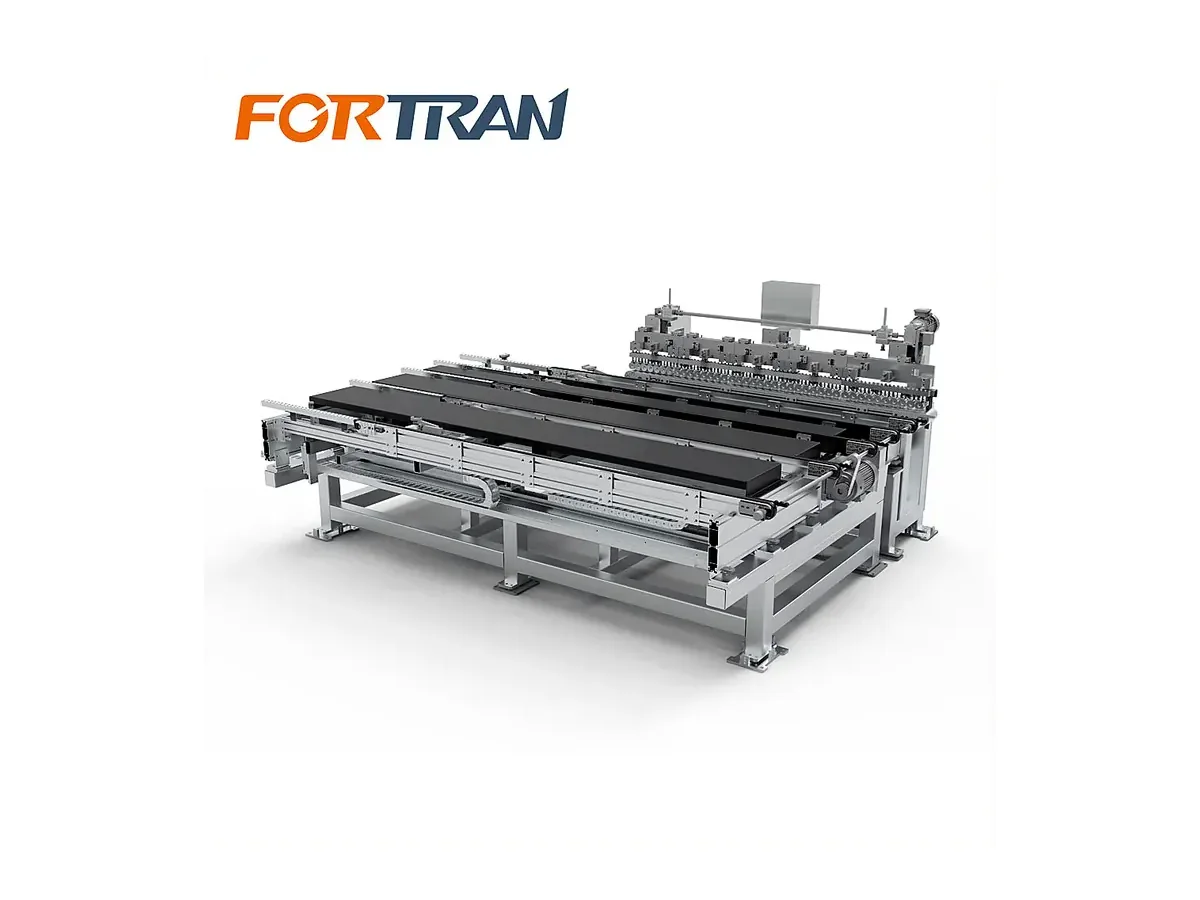
FORTRAN flexible-pusher edge bander return conveyor. Review panel contact points, return routing and operator receiving positions for the proposed cell.
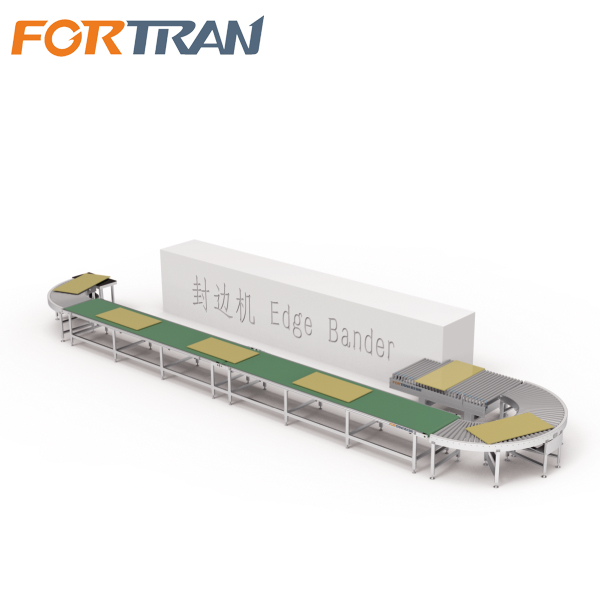
FORTRAN curved edge bander return conveyor for furniture panels. Match the return route, turning clearance and operator handover to the actual machine layout.
Packaging · Conveying · Lifting · Loading · Cleaning