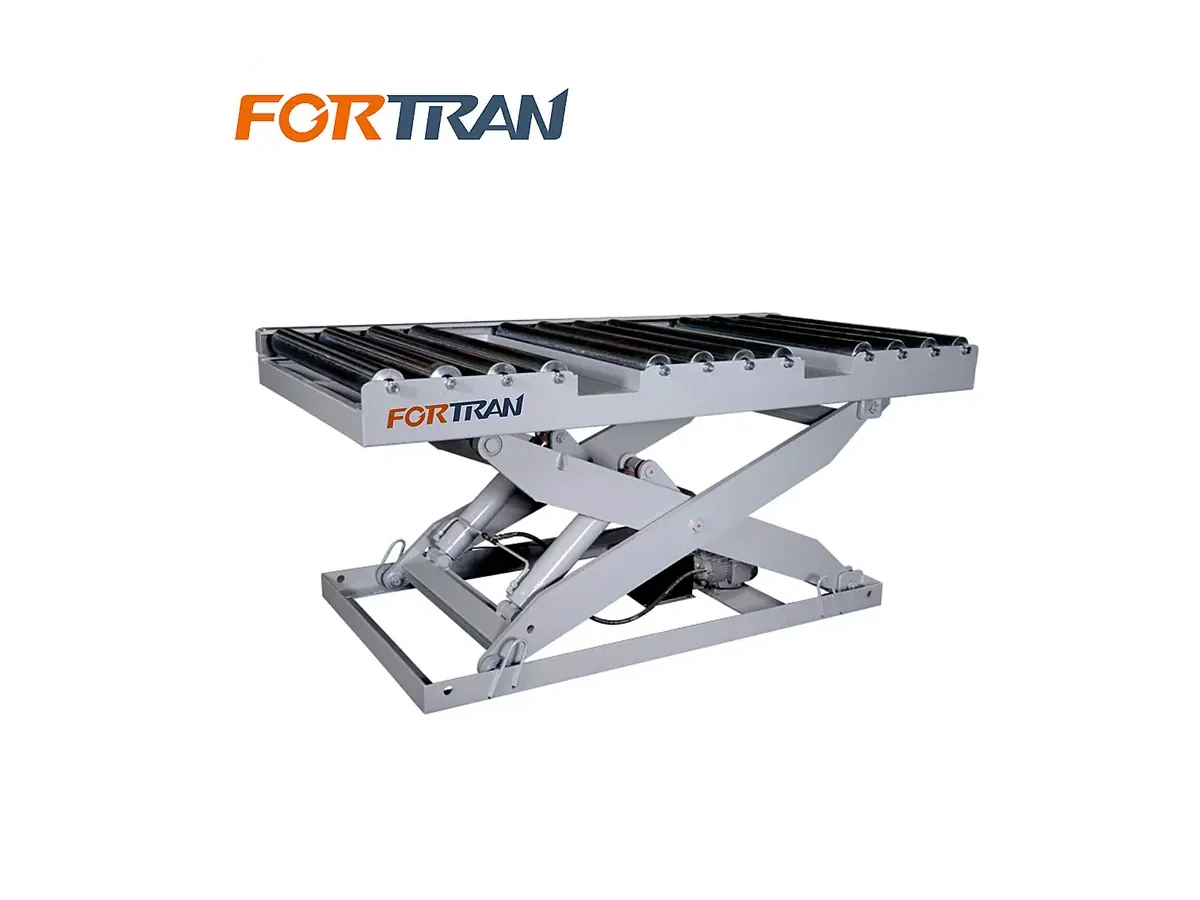
Workpiece & load
Confirm workpiece dimensions, load per lift and table surface.
FORTRAN powered roller lift table with forklift access for panel handling. Define fork entry, load placement and automatic conveyor-transfer requirements.
FORTRAN powered roller lift table with forklift access for panel handling. Define fork entry, load placement and automatic conveyor-transfer requirements.
Confirm workpiece dimensions, load per lift and table surface.
Confirm minimum and maximum working heights and required lifting travel.
Select roller, belt or fixed-table configurations for the handling method.
| Height range | 400~1650mm |
|---|---|
| Table dimensions | 2500*1250mm |
This lifting station combines a powered roller surface, controlled lifting and forklift access for panel handling. It connects vertical height adjustment with roller transfer; the load support and forklift approach must be assessed together.
Use the table dimensions and listed height range as configuration references. Confirm the required loaded and receiving heights, the support under the actual load and the allowable load for the supplied configuration before choosing the station.
Provide fork dimensions, approach direction and load geometry. Confirm clearances and the lifting and roller-transfer sequence so forklift access does not conflict with the table's movement.
No. Check the total load, its centre of gravity and underside support, fork clearance, height requirements and adjacent conveyor interface. A workpiece that fits the table can still require a different support or transfer arrangement.
Confirm them separately. Provide the panel stack base or pallet underside, runner orientation, weight and smallest supported dimensions. The roller spacing and transfer gap must suit the actual contact surfaces.
Show the fork approach, load placement and withdrawal space separately from the roller transfer route. Include load-base details, weight and receiving heights. Ask the proposal to identify the lifting positions, roller drive and control sequence for the intended loading and discharge method.
Product image
Download imageChinese / English specifications
Download detailsData version: 2026-09-30· Original product source
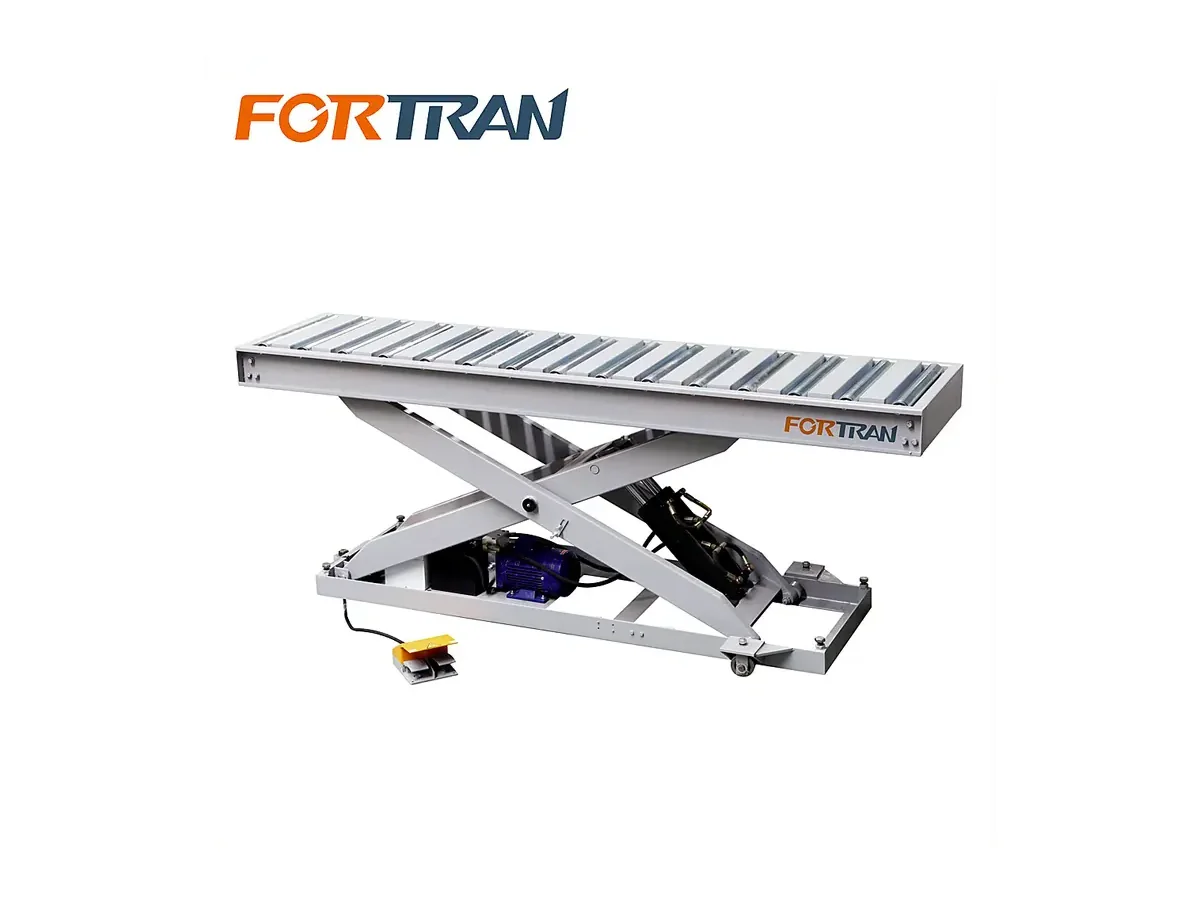
FORTRAN 1-ton hydraulic roller lift table for panel height transfer. Match load support, table width and both conveyor handovers before requesting a quote.
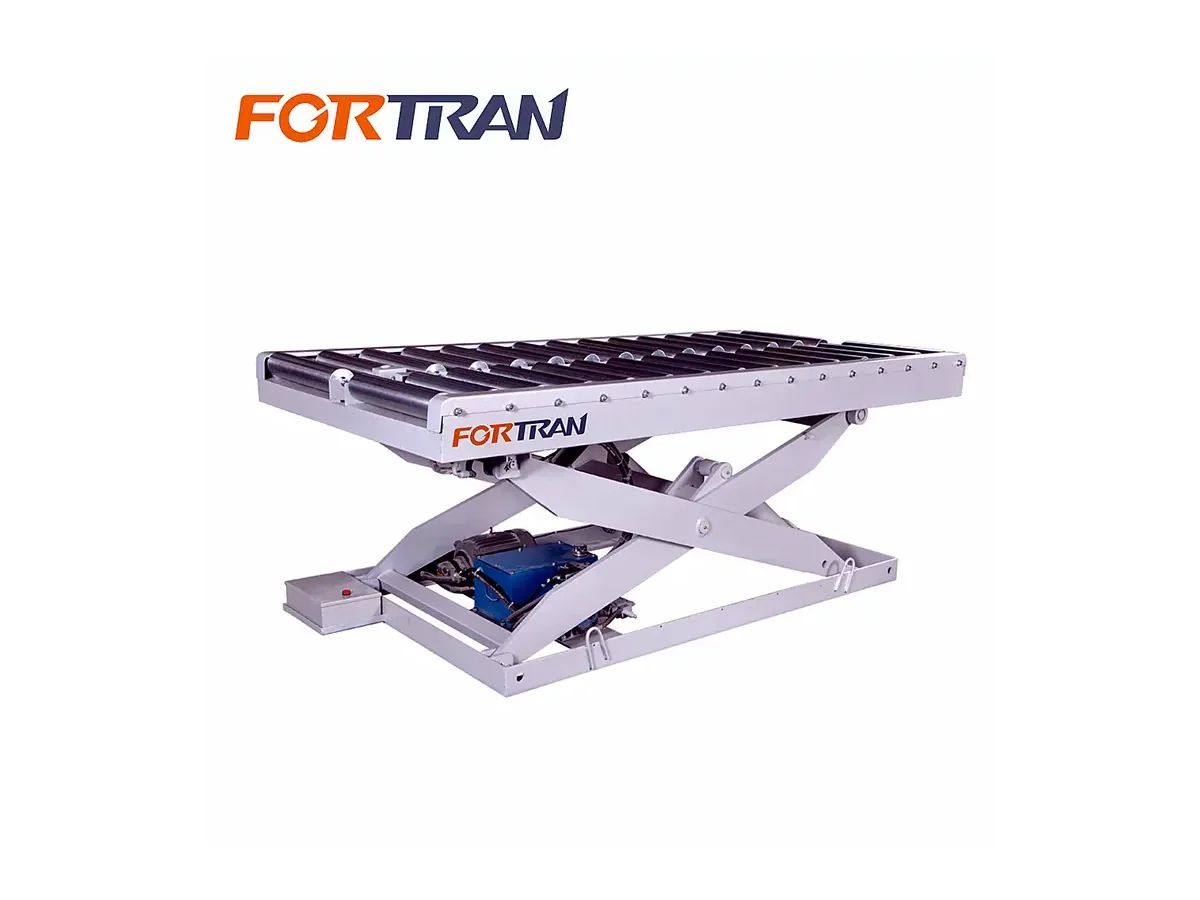
FORTRAN lift table with double-row powered rollers for panel transfer. Review load support across the rows, working heights and the discharge sequence.
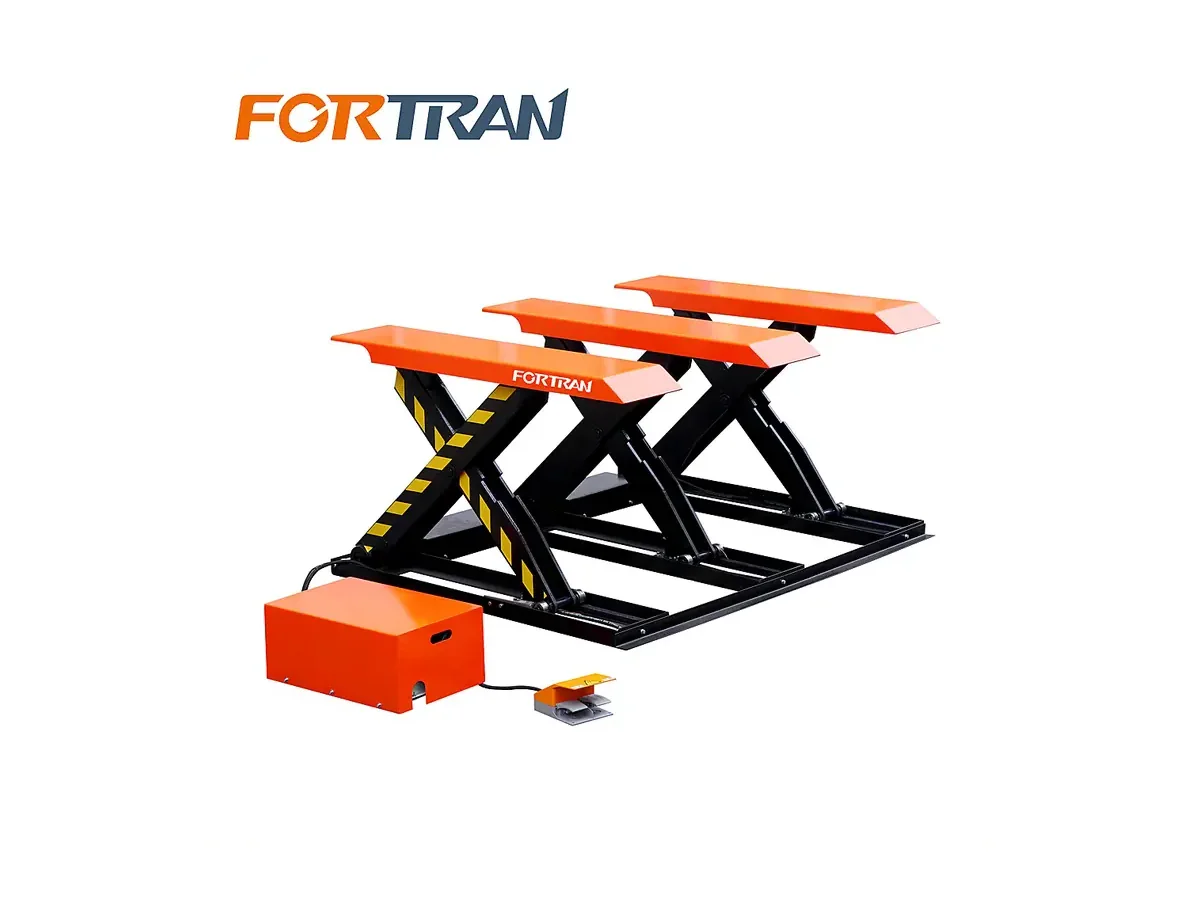
FORTRAN 3-ton E-type hydraulic lift table for panel handling. Review platform support, pallet-truck geometry and required working positions for a quotation.
Packaging · Conveying · Lifting · Loading · Cleaning